The Idea
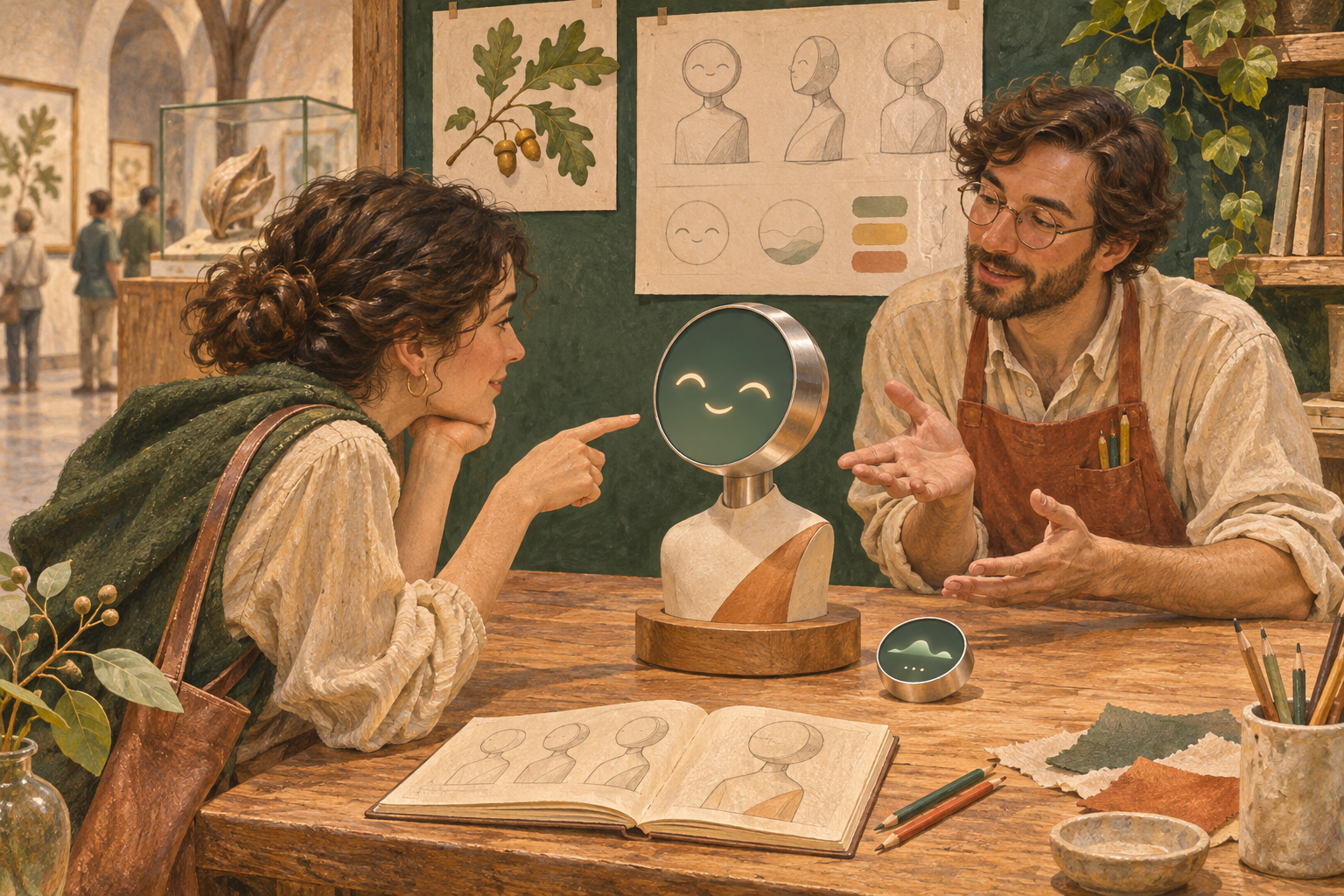
A small sculpture with a screen for a face, planned as a partner for Astrolabe.
The Problem
A visitor needs to know where to start when software is placed in a room.
Who Could Use It / Who Might Pay
Exhibit visitors and makers. Possible buyer: Museums or studios, if the visit proves useful.
Market To Test
Art and learning exhibits that respond to people.
Other Choices
A screen kiosk is simpler. Arduino helps makers build hands-on exhibits. [A01]
Our Idea And The Trade-Off
Try a small sculpture beside Astrolabe. Watch whether it helps a person begin. The sculpture takes more work than a screen. It should make the visit clearer or more inviting.
What Happened In 2026
A project site and design records exist. A whole working sculpture has not been checked.
What Comes Next
Build one safe scene. Watch how a visitor finds where to begin.
Reference: Arduino Education (A01), checked 6 November 2026. Sources and limits.
Evidence and fuller year-end record
maria/README.md
The MARIA repository presents a figurine paired with Astrolabe as an experiment in embodied, attentive technology. It includes a static project site and deployment workflow. The available README does not establish the detailed physical specifications or a completed interactive assembly.