The Idea
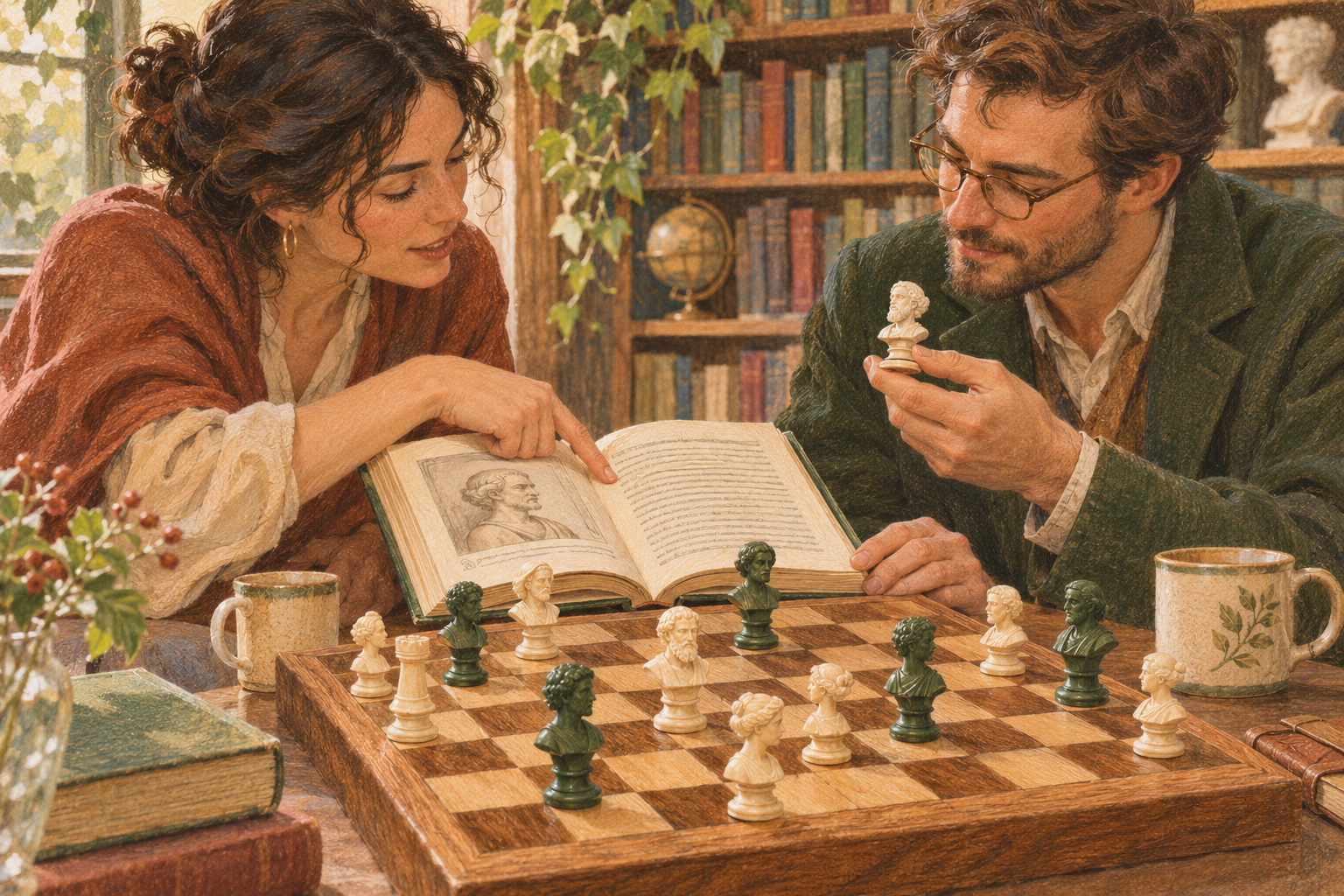
Portrait busts being turned into printable chess pieces.
The Problem
A game piece can carry a face without helping anyone learn who it represents.
Who Could Use It / Who Might Pay
Chess players, families and collectors. Possible buyer: Players, gift buyers or museums.
Market To Test
Chess sets and learning collectibles.
Other Choices
A normal chess set is ready to play. Maker tools can turn designs into custom pieces. [A01]
Our Idea And The Trade-Off
Use portraits as an invitation to learn while keeping the game playable. A normal set makes pieces easy to tell apart. Portrait pieces must still be simple to play with.
What Happened In 2026
A bust-to-print tool and sample meshes exist. A complete physical set and working reader are not proven.
What Comes Next
Print and play with a small set; check stability, strength and easy piece recognition.
Reference: Arduino Education (A01), checked 6 November 2026. Sources and limits.
Evidence and fuller year-end record
faculty/scripts/export-faculty-bust-stl.ts
The Faculty repository includes a bust-to-STL exporter with chess-piece scaling, stems, plinths, and optional split parts. It also contains an Einstein bust and plinth mesh with a review render. These are printable design artifacts. A complete physical set, NFC recognition, and reliable pedestal interaction require separate assembly and test records.