
The Idea
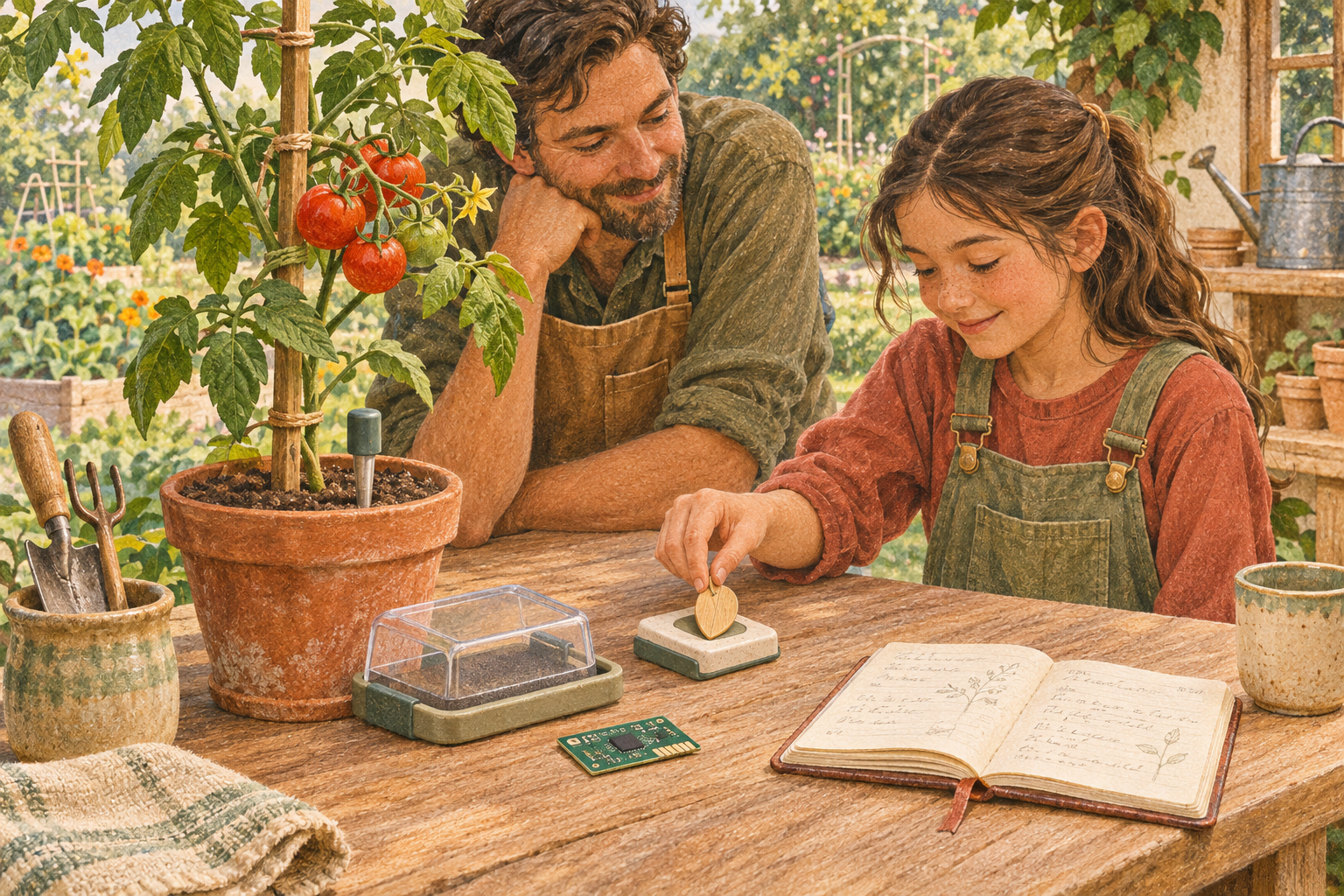
A planned set of plug-in sensor cards for simple science tasks.
The Problem
Changing sensors can turn a simple nature lesson into a wiring puzzle.
Who Could Use It / Who Might Pay
Learners with an adult and small science clubs. Possible buyer: Parents, schools or museums.
Market To Test
Science kits and sensor tools.
Other Choices
Arduino Education offers kits for science and small circuits. A hand meter can answer one small question. [A01]
Our Idea And The Trade-Off
Let each sensor card tell the reader what it is. Give it a safe place to connect. A hand meter may answer the question faster. Cards add parts that must work together.
What Happened In 2026
Card designs and power risks are recorded. A tested set of sensors has not been built.
What Comes Next
Build one card and compare its reading with a trusted meter.
Reference: Arduino Education (A01), checked 6 November 2026. Sources and limits.
Evidence and fuller year-end record
atlas/docs/MYNAH-ATLAS-GLOBAL.md
The architecture proposes card-shaped sensor boards with NFC identity, contact pads, protected power, and declared electrical profiles. Environment, soil, water, sound, color, distance, and motion are candidate measurements. The document identifies antenna tuning, power isolation, and calibration concerns; a tested assembled sensor family remains continuing work.